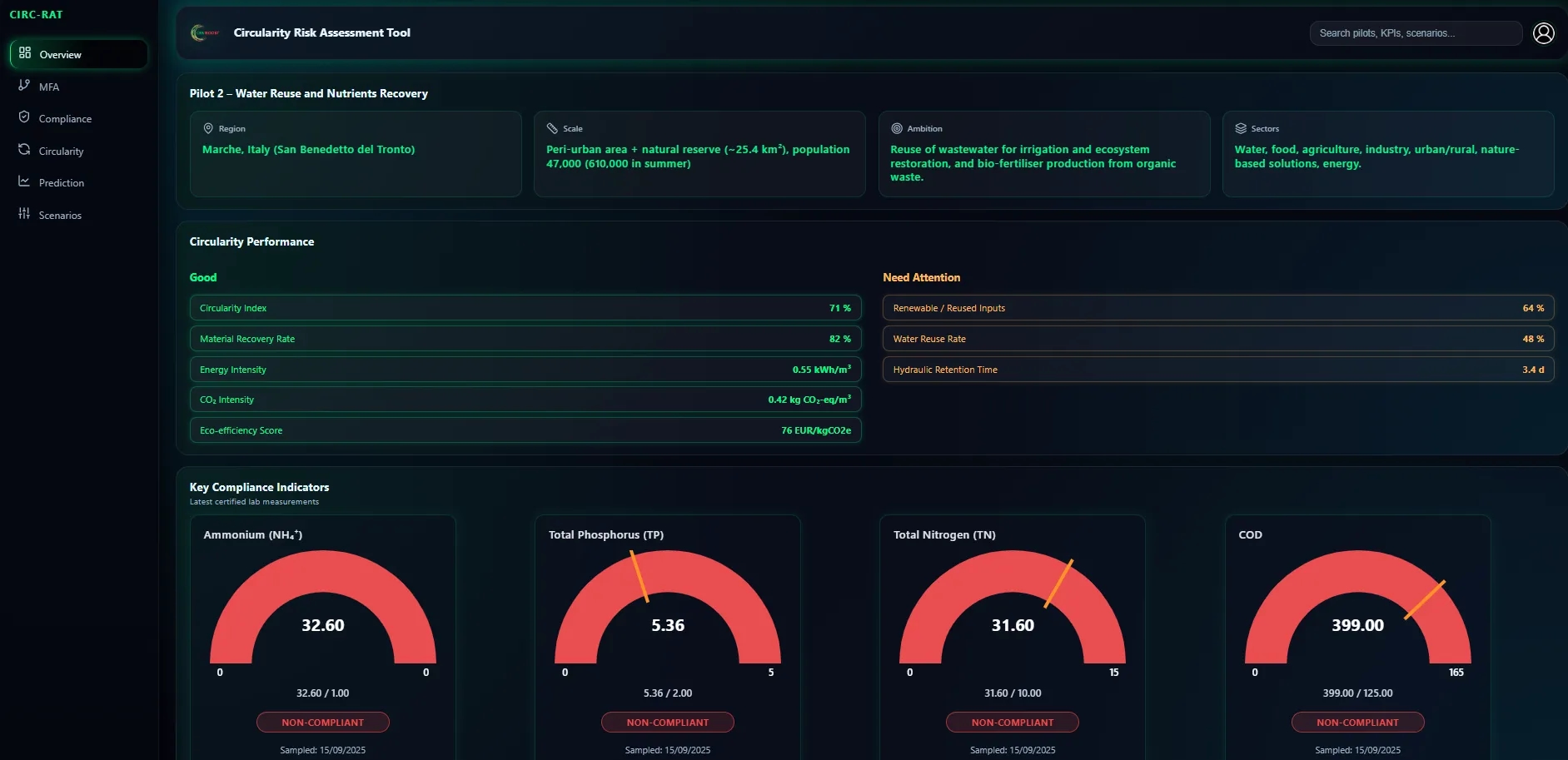
Circularity and Risk Assessment Tool (Circ-RAT)
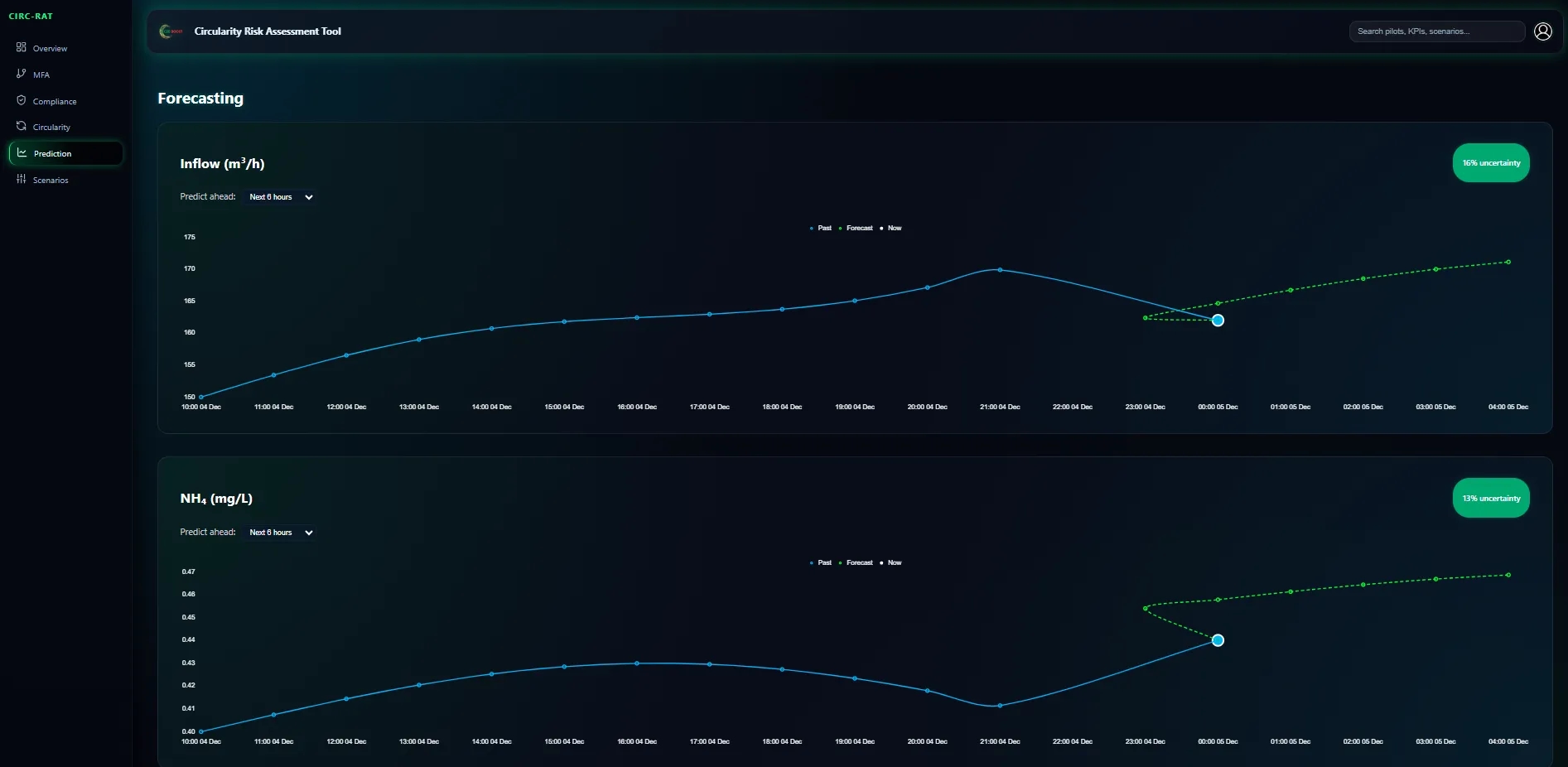
Circ-RAT connects process data with circularity and sustainability assessment, with forecasting and risk-analysis functions under development.
Performance monitoring through insights to process health.
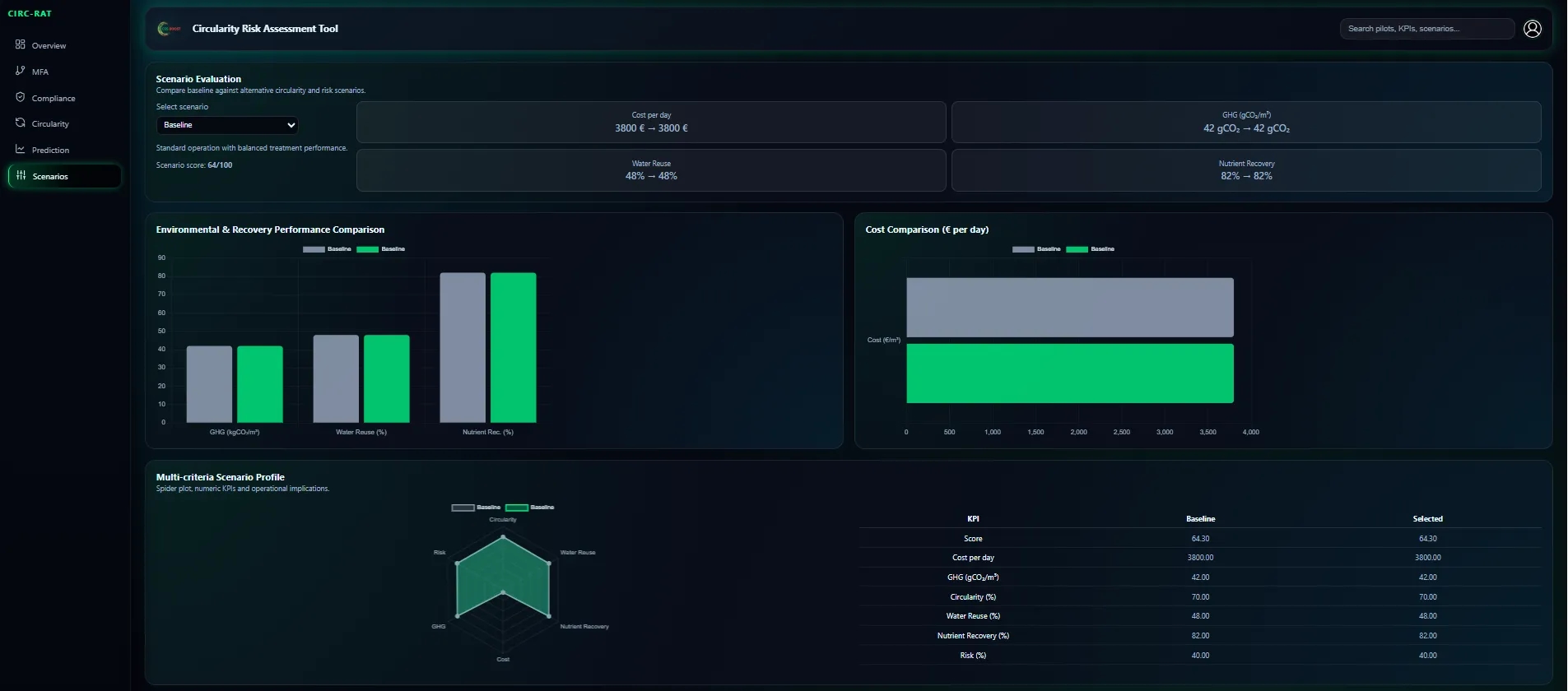
Economic and environmental sustainability analysis.
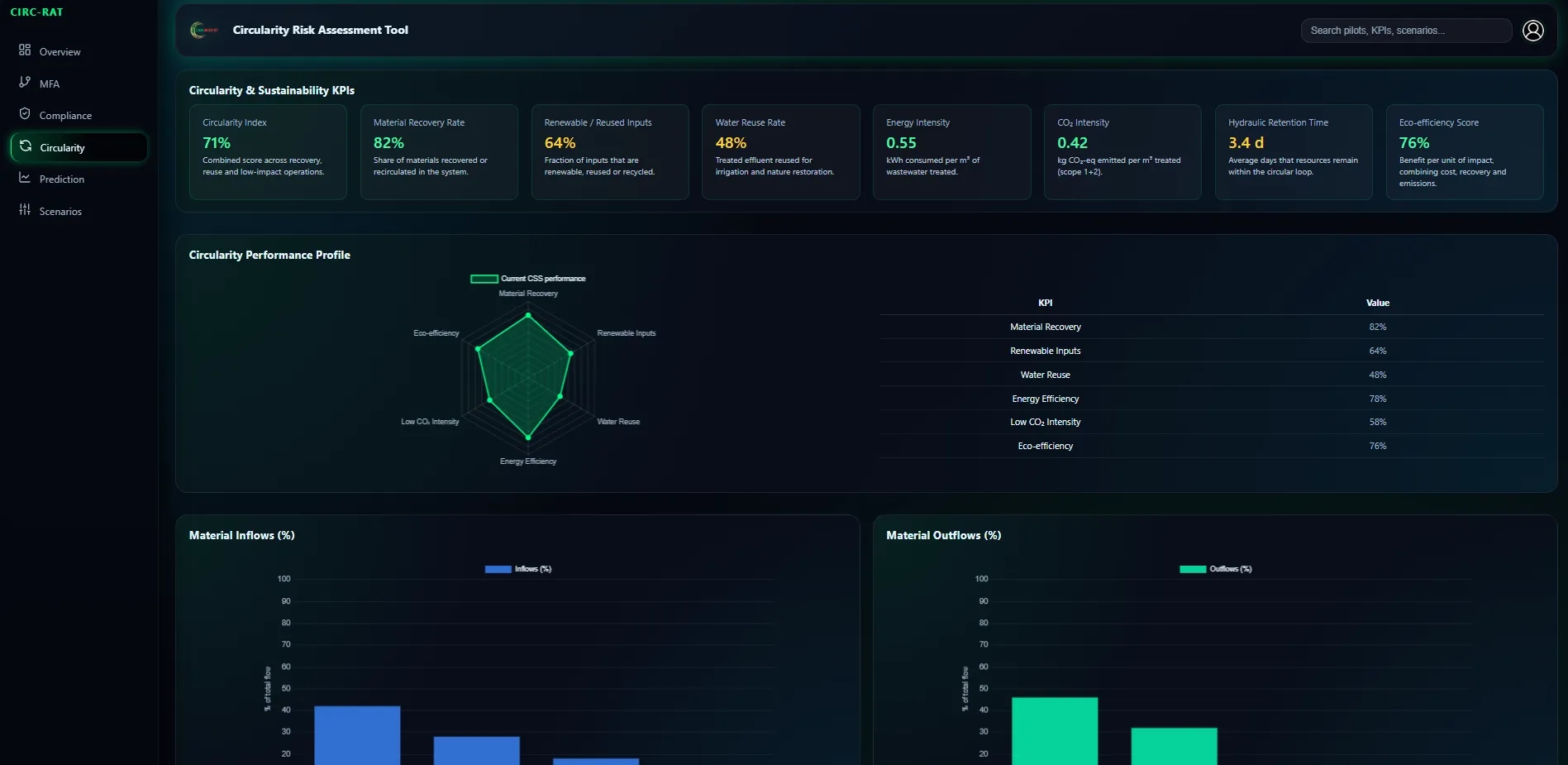
Circularity assessment using ISO 59020 KPIs.
Strategic planning through virtual planning and testing.
Risk-assessment functions linking circularity indicators and supply-chain risks are under development.
Scenario development and scenario-based impact assessment.
Dashboard visualisation and KPI monitoring.
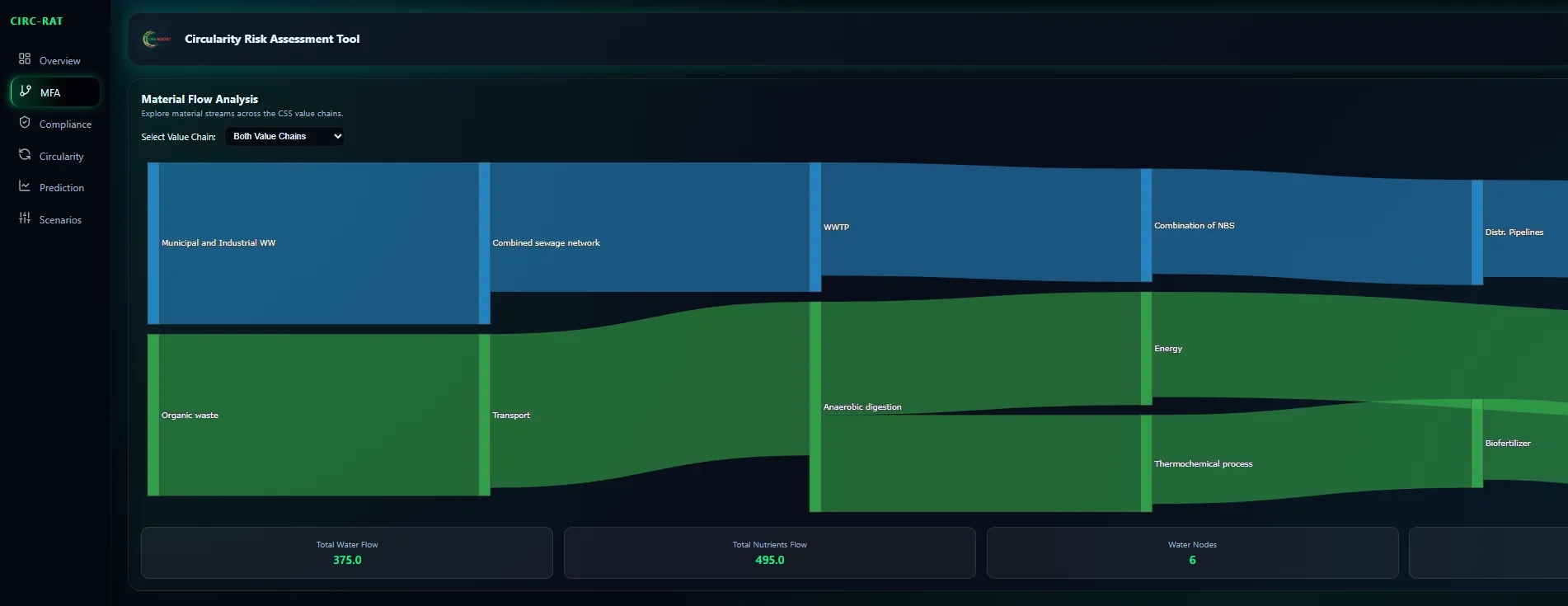
Assessment uses information on process and material flows, together with the indicators and thresholds relevant to the circular value chain. Quantities need to be associated with the correct stream and period, while material-quality requirements provide context for interpreting the usability of recovered resources. Historical and operational pilot measurements support the development of forecasting and risk-related functions. Sample or scenario inputs need to remain distinguishable from measurements used in a pilot-specific assessment.
The DAMS backend connection has been tested and integrated with the user interface. Measurements from Pilot 2 have been mapped to sensor names, integrated and visualised. The Circularity and Risk Assessment Tool (Circ-RAT) is designed to help stakeholders examine material flows, circularity performance and operational risks within a circular value chain. The approach connects material-flow information with indicators and threshold-based checks, providing a structured basis for identifying conditions that merit attention. Its assessment functions are intended to support monitoring, forecasting and what-if exploration. Material quantities and quality requirements are relevant to the analysis because a recovered stream must be usable by the receiving process, not simply available in a given volume. The tool therefore brings circularity assessment together with the consideration of risks that can affect the continuity and suitability of resource exchanges.
Develop and integrate the soft-sensor model and circularity risk assessment module; document validation datasets and predictive performance.
Pilot sensor readings, associated names and units, timestamps, process context and risk/circularity inputs.
Pilot-data visualisations supporting circularity analysis. Soft-sensor and risk-assessment outputs are under development and validation.
DAMS backend connection and connected web interface; module integration remains in progress.