MIRA Digital Twin / Virtualisation Platform
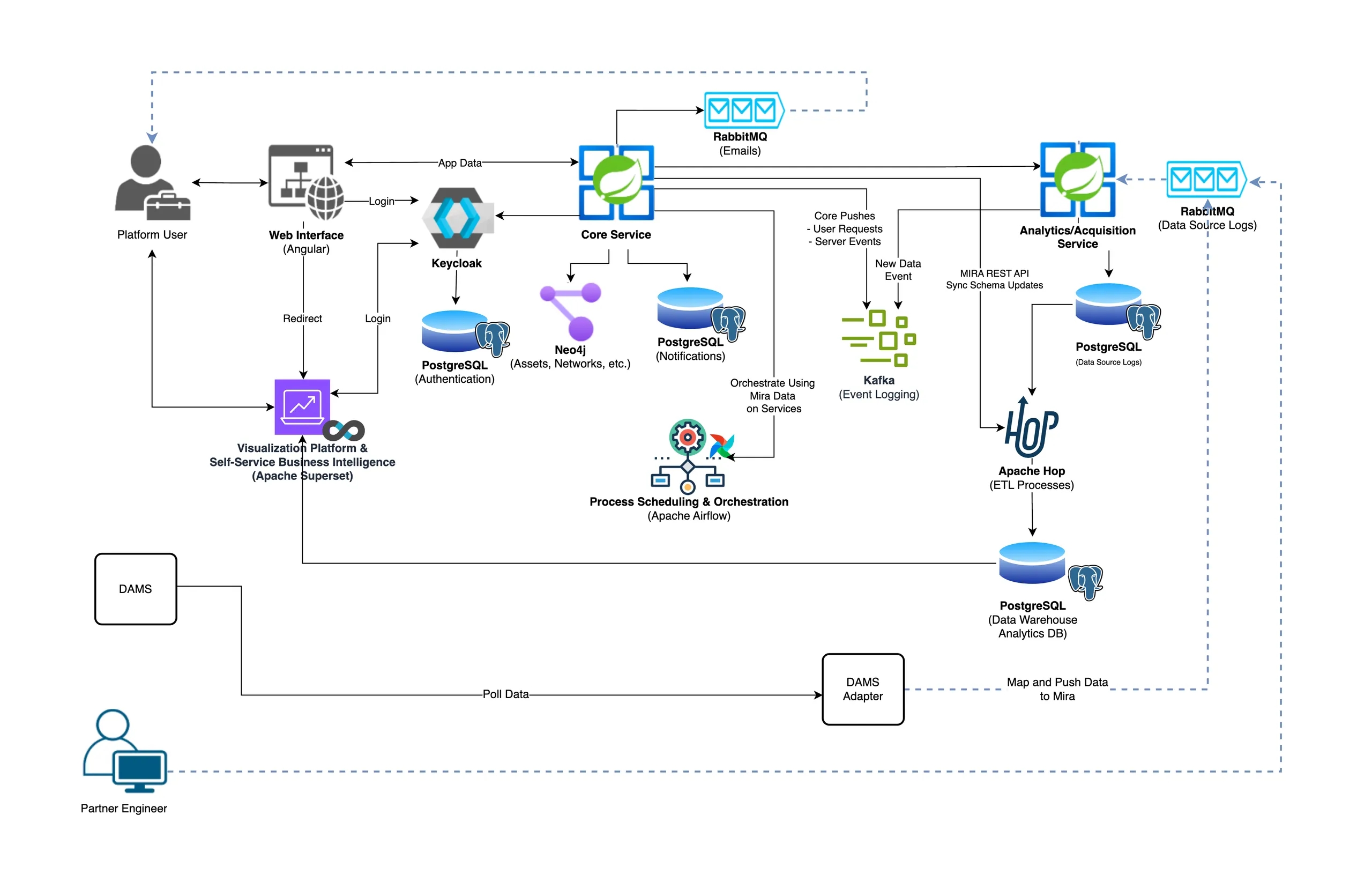
The CSSBoost Virtualisation Platform, built upon MIRA, is the Digital Twin and integration framework of the project. It creates and manages digital representations of assets, operations, networks and ecosystems, acts as a single source of truth, and provides the convergence point for CSSBoost data, services and intelligence.
Creation and monitoring of Digital Twins for assets, networks, shared assets and ecosystems.
Monitoring through DAMS and other configured data feeds, with update frequency matched to each source.
Integration point for analytics, predictions, optimisation, PSM, LCA and scorecards.
What-if scenario and impact-assessment support.
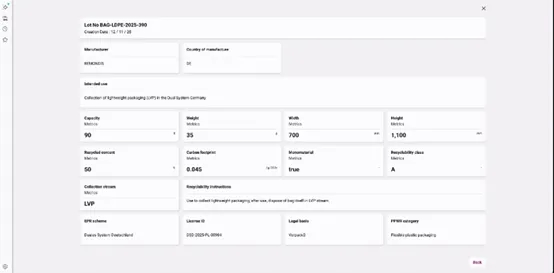
Digital Product Passport services implemented as part of the Digital Twin system.
Collaboration mechanisms for asset sharing between organisations.
Report generation and access to lifecycle and time-series data.
Digital-twin configuration requires the assets, networks and relationships to be represented, together with their static properties and associated data sources. Measurements need a defined structure so that values and timestamps can be mapped to the appropriate source and asset. Historical CSV or Excel imports use a prepared schema. Periodic DAMS retrieval and other configured interfaces supply the data used by the corresponding models and visualisations.
The platform provides digital models, dashboards, role management and connections to selected services. Development includes manual data-entry forms and bill-of-materials features. The first integrated prototype retrieves DAMS data at managed intervals. MIRA provides the virtualisation environment for representing CSSBoost assets, processes and connected value chains as digital twins. An asset can carry static properties and time-dependent measurements, while networks organise related assets within an administrative or operational boundary. Shared assets and ecosystem views support the representation of connections between different actors and domains. The platform combines these models with data sources, visualisations and service integration. Historical information can be imported through structured CSV or Excel files, while messaging and API interfaces support other data-exchange patterns. Data must be mapped to the appropriate source and model so that measurements retain their meaning within the digital representation.
Extend pilot data connectivity and service integration; validate each pilot workflow and its update frequency.
Configured value-chain models, entities and relationships, harmonised pilot data and service outputs.
Digital representations, dashboard views and access to connected services. Data freshness depends on the actual pilot ingestion schedule.
Digital-twin interfaces support service integration. The first prototype uses periodic data retrieval, with further module and messaging integration in development.
Hosted web access with credentials supplied on request. D4.6 describes Docker-based deployment on a compatible server.