Digital Product Passport (DPP)
The CSSBoost Digital Product Passport creates, views and manages digital product passports for assets moving through value-chain ecosystems. It is integrated with the Virtualisation Platform so that DPP templates and records can be updated using lifecycle, asset and production data.
Create, view and manage DPP templates and records.
Define, configure and share DPP templates with collaborators.
Update DPP records using asset lifecycle data and telemetry.
Link previous-step passports to support value-chain traceability.
Support DPP-assisted value-chain configuration.
Track materials, provenance, lifecycle information and cumulative indicators.
Enable traceability across circular value chains.
A passport requires a defined template and an identifier for the product, asset, reference or lot it describes. Relevant inputs include origin, material and process properties, as well as relationships to upstream materials or components. Dynamic information can be associated through linked data sources and digital twins. Sharing settings determine which information is available to selected collaborators or to a wider audience.
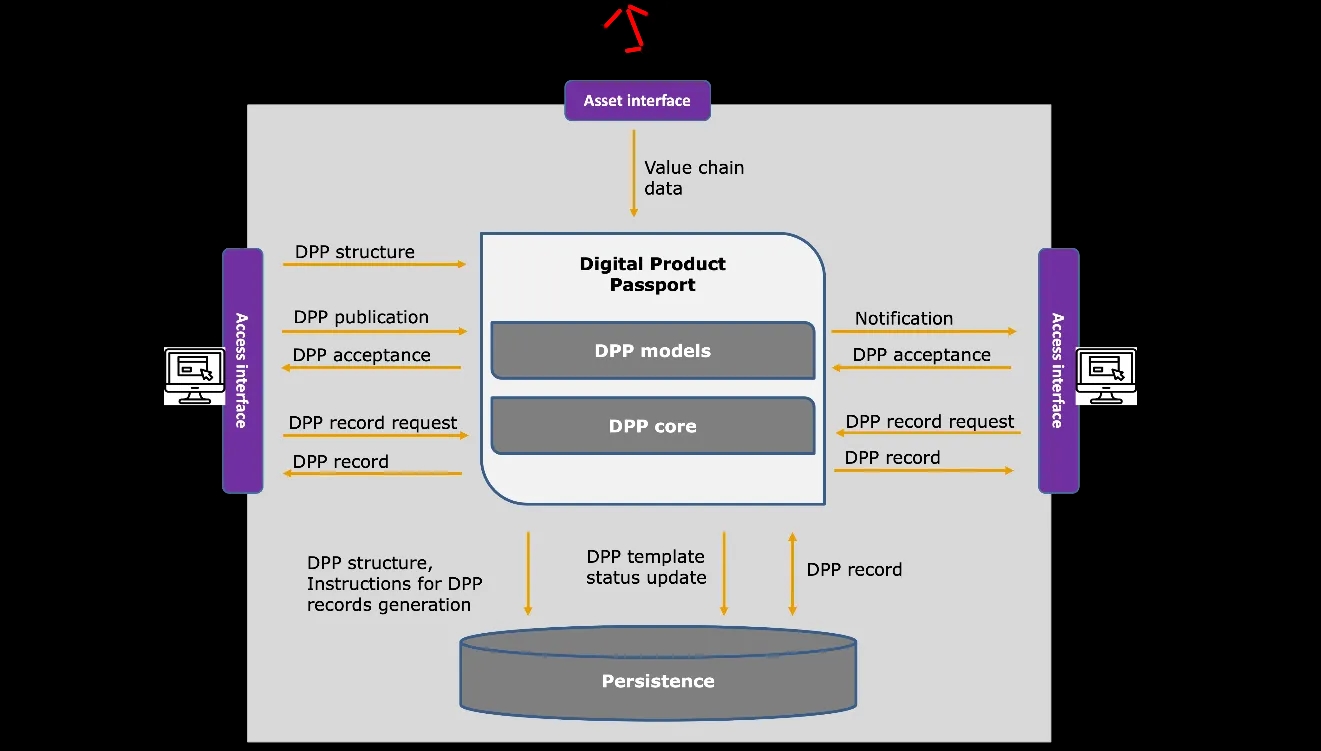
The product-passport data model and lifecycle features provide a basis for structured traceability. Sharing functions are being extended, alongside investigation of battery-passport requirements. The Digital Product Passport service structures information about materials, products and assets so that it can be shared across connected actors. Passports are created from configurable templates and associated with a product, reference or lot. A template defines the information relevant to that application, including origin, material composition, processing characteristics and other product properties. The service supports both static information and links to dynamic data. Its data model combines relationships between entities with the records describing individual passports, while REST interfaces support integration with other services. Users can configure templates, publish and monitor passports, share selected information with collaborators or the public, and deactivate a passport when appropriate.
Improve the interface, extend pilot passports, connect the configurator and explore the Pilot 4 battery use case.
Product/component identifiers, composition, lifecycle events, supporting documents and controlled-access information.
Structured passport records and shared lifecycle information for project applications. Product-specific regulatory requirements are assessed separately.
Interfaces with the configurator and digital twin are being refined; access and data permissions are managed in the platform.