Process Simulation Modelling: Software and Modelling Service
Material-flow modelling and what-if scenario assessment for circular value chains.
Process Simulation Modelling helps users represent circular value chains and compare alternative operating scenarios. The software models processes, actors, resources and flows, producing material and energy balances and visual comparisons. Models developed for the regional pilots are being refined with operating data and partner feedback.
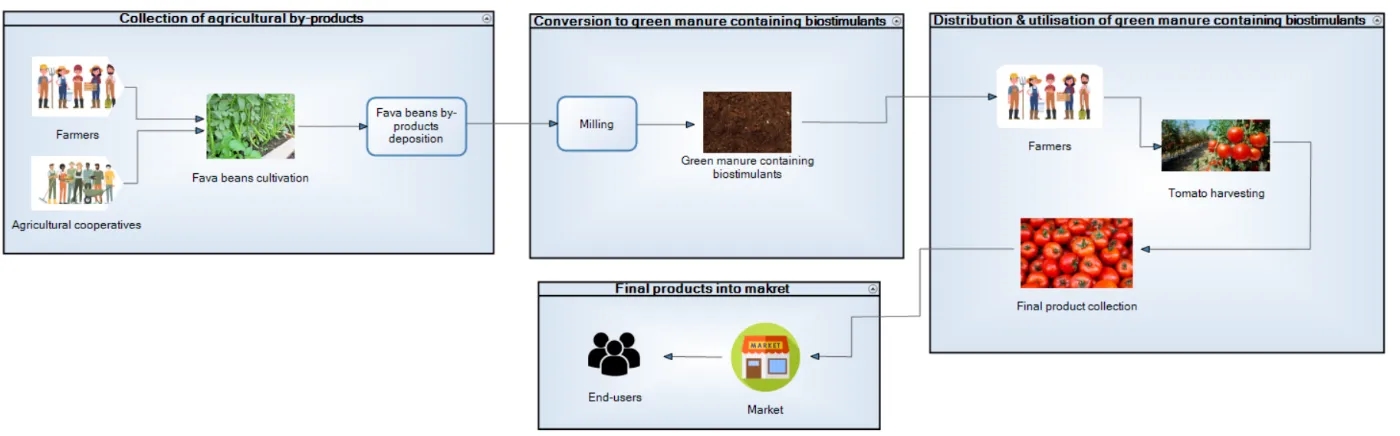
Process Simulation Modelling (PSM) represents circular value chains as material-flow networks. A model combines processes with input, junction and output places, connected by resource flows. Resources have defined names and units, while processes can be organised into stages and associated with the actors responsible for them. This structure allows users to examine how activities and material exchanges form a complete value chain.
Calculations can use conversion factors, scripts or external services for more complex process relationships. At least one resource flow must be known to solve the model. Process-specific and global parameters allow users to vary operating assumptions and compare alternative configurations. The standalone modelling application is complemented by a web API for uploading models, updating parameters and running simulations remotely.
Within CSSBoost, PSM provides a basis for what-if analysis and for linking physical flows to sustainability assessment. Dynamic LCA and the Sustainability Balanced Scorecard build on the modelled processes and inventories. Simulation outputs describe the consequences of the specified model and assumptions, allowing alternatives to be explored before decisions are applied to a physical value chain.
The Technical University of Crete develops PSM and its modelling approach.
Material-flow models comprising processes, actors, resources and flows, with parameter-based and structural scenario comparisons.