Circularity-Informed Bus Procurement and Supplier Assessment
A fleet procurement practice examining vehicle requirements, material information and supplier processes in Lisbon.
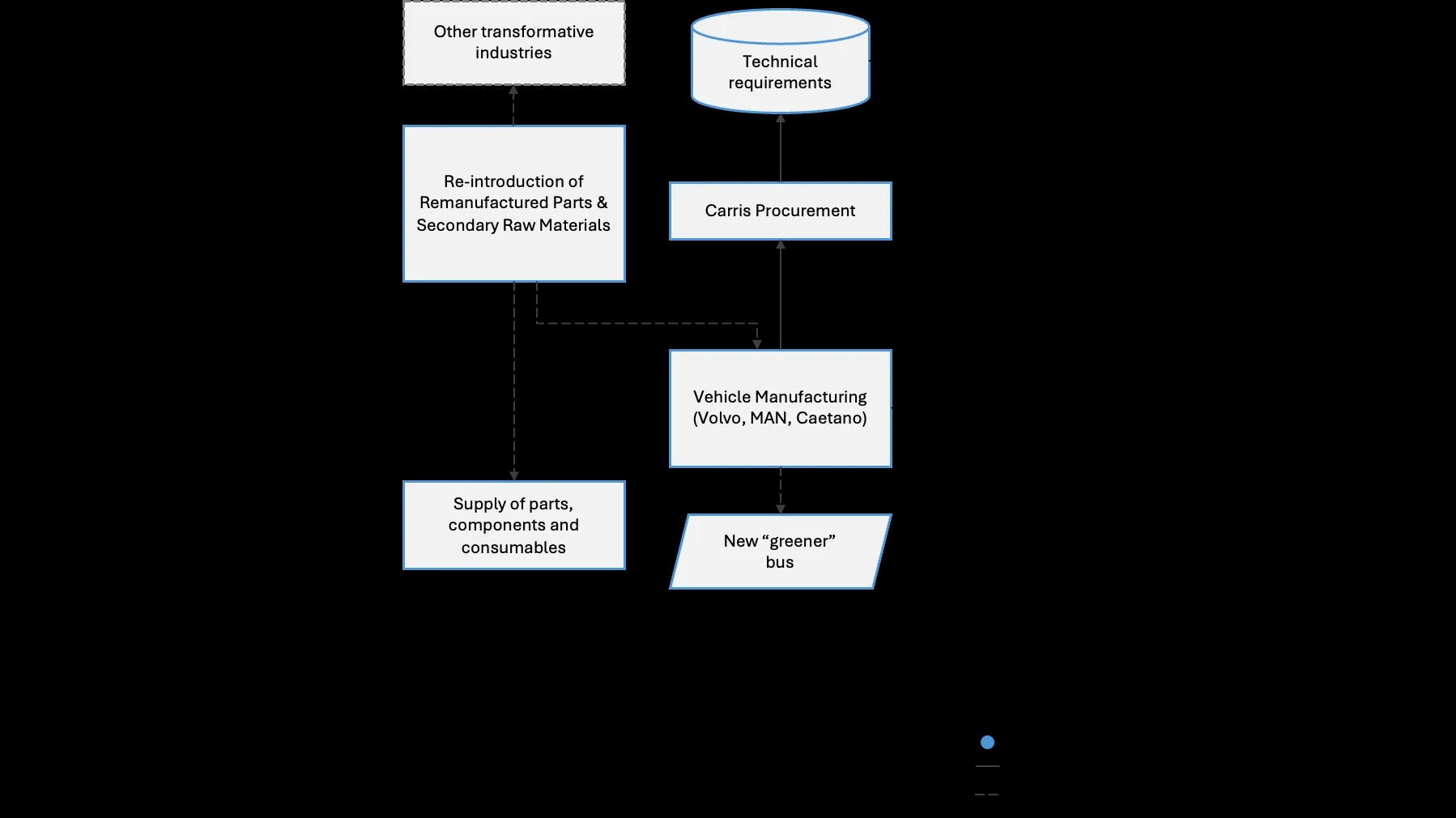
The practice connects CARRIS procurement requirements with supplier information on vehicles and components. Diesel, natural-gas and electric buses form part of the pilot context. Tender review and supplier engagement are considered alongside operational monitoring, maintenance and end-of-life recovery.
Tender review is ongoing. New procurement criteria and their effects on vehicle selection are still being assessed.
The Lisbon pilot examines how bus procurement can influence circularity across vehicle production, service life and end-of-life management. The practice connects CARRIS procurement requirements with the characteristics of buses and their components, including durability, maintenance, recoverability and the potential use of recyclable materials.
The vehicle-production value chain is considered alongside two other pilot chains: operation and maintenance of buses, and recovery of end-of-life vehicles. This links decisions made when a vehicle is purchased with the practical ability to keep it in use and recover value from its components. The fleet context includes diesel, natural-gas and electric technologies, with different suppliers and vehicle characteristics.
Procurement work is supported by the pilot's operational monitoring and analysis of maintenance and component recovery. CARRIS and the participating technical partners examine the measurements and indicators needed to understand lifecycle performance, rather than evaluating a purchase only through its initial acquisition characteristics.
The practice is under development within the pilot. It provides a framework for considering circularity in vehicle and component decisions, while specific procurement criteria and their effects depend on the applicable purchasing process, supplier information and evidence from fleet operation.
The environmental objective is to connect vehicle-selection decisions with resource use over the complete bus lifecycle. Durability, maintenance and recoverability are considered together with operational energy and emissions information.
The pilot monitors vehicles with different propulsion technologies and examines the relationship between maintenance and end-of-life component recovery. This supports a more complete lifecycle perspective, while the environmental effect of any procurement intervention must be evaluated against the actual vehicles, operating conditions and purchasing decisions involved.