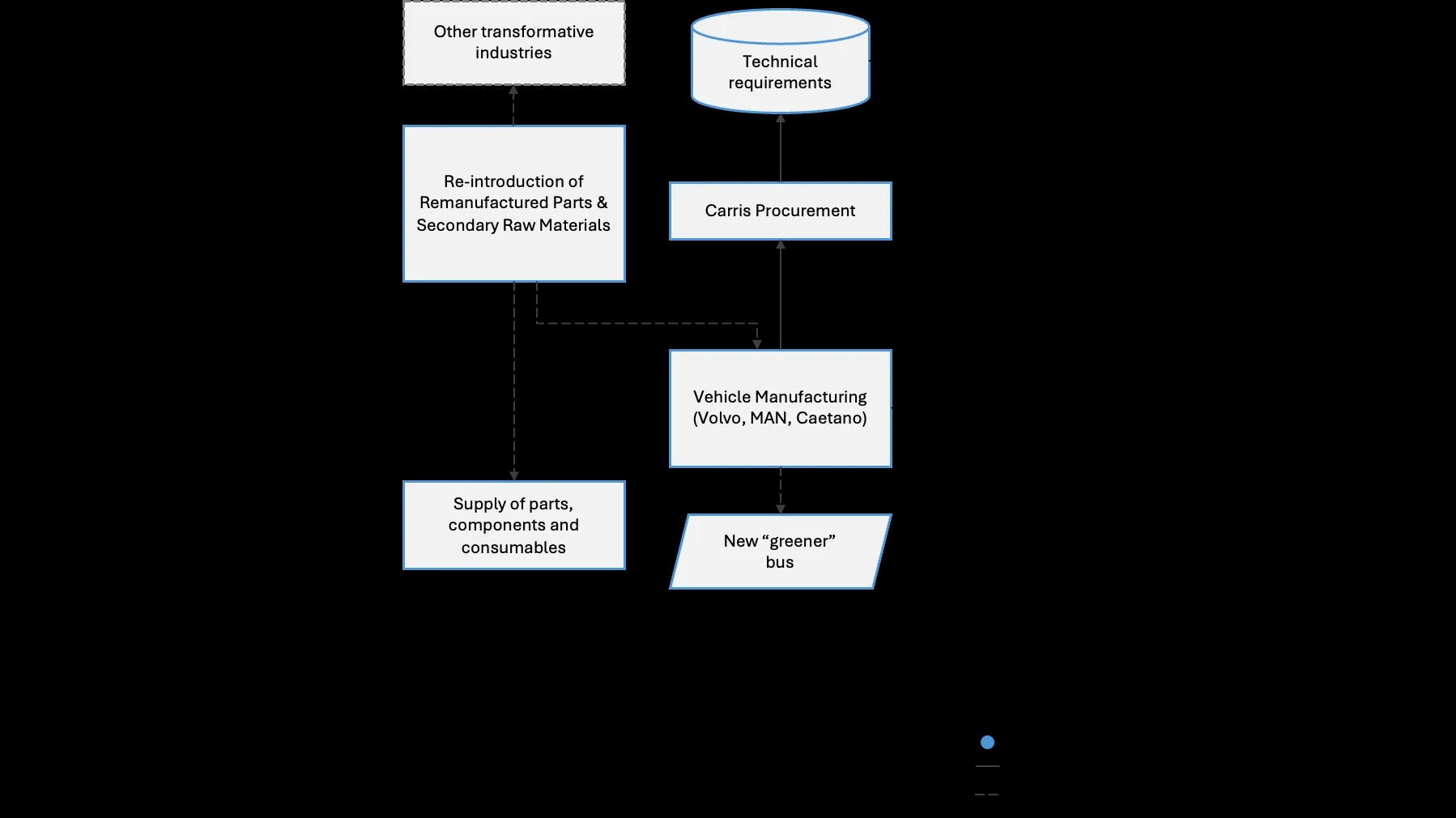
Pilot 4 / Value Chain 1: Sustainable Vehicle Production
CARRIS is modernising its fleet with natural gas and electric buses, but it has limited direct control and visibility over the vehicle manufacturing process.
This makes it difficult to collect manufacturing-related indicators, influence environmental practices in vehicle production and systematically assess the recyclable material content of new vehicles.
The Lisbon pilot examines how bus procurement can influence circularity across vehicle production, service life and end-of-life management. The practice connects CARRIS procurement requirements with the characteristics of buses and their components, including durability, maintenance, recoverability and the potential use of recyclable materials.
The vehicle-production value chain is considered alongside two other pilot chains: operation and maintenance of buses, and recovery of end-of-life vehicles. This links decisions made when a vehicle is purchased with the practical ability to keep it in use and recover value from its components. The fleet context includes diesel, natural-gas and electric technologies, with different suppliers and vehicle characteristics.
Procurement work is supported by the pilot's operational monitoring and analysis of maintenance and component recovery. CARRIS and the participating technical partners examine the measurements and indicators needed to understand lifecycle performance, rather than evaluating a purchase only through its initial acquisition characteristics.
The practice is under development within the pilot. It provides a framework for considering circularity in vehicle and component decisions, while specific procurement criteria and their effects depend on the applicable purchasing process, supplier information and evidence from fleet operation.
The procurement work is considered together with operational monitoring and end-of-life recovery. Relevant information includes vehicle and component characteristics, energy use, maintenance requirements and recoverability. The pilot uses a monitored fleet containing diesel, natural-gas and electric buses, allowing lifecycle questions to be connected with actual service conditions. Specific procurement effects need to be distinguished from changes caused by vehicle technology, age or operation.
CARRIS influences vehicle production through its procurement of new buses and the required functions and performance specified in tender documentation. Bus and component manufacturing are performed by external suppliers, so these production processes are not directly controlled by the operator. The pilot examines how durability, recyclability and material information can be reflected in vehicle requirements and supplier assessment. Tender documentation covers diesel, compressed-natural-gas and electric buses, including technical characteristics such as consumption, emissions and autonomy.
Engagement with manufacturers, including CaetanoBus and Irmaos Mota, supports the review of procurement and environmental criteria. CARRIS contributes its operational needs and purchasing requirements.
The work focuses on procurement and supplier engagement. Manufacturing-impact assessment depends on supplier data, vehicle specifications and consistent lifecycle boundaries.
Digital Tools