Agricultural Residue Valorisation for Tomato Cultivation
Use of faba-bean biomass and agricultural residues in controlled tomato-cultivation trials in Crete.
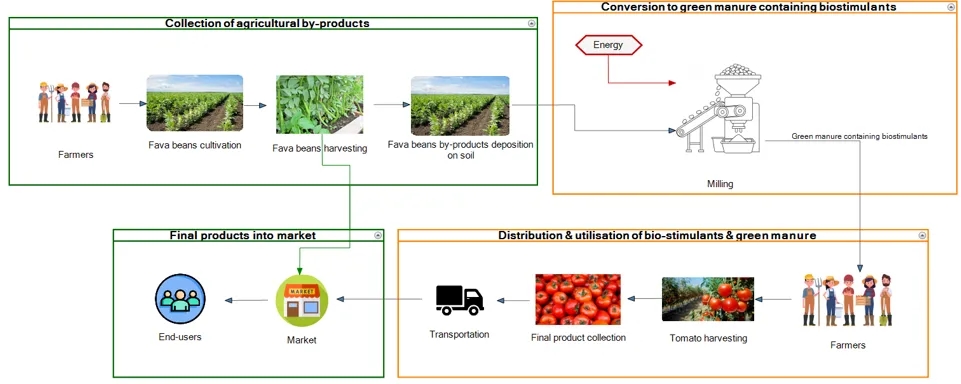
The cultivation sequence uses faba beans followed by tomatoes. Residues are shredded and ploughed into the soil, with incorporation at flowering or after harvest compared against a control without green manure. Soil analyses and continuous soil and microclimate monitoring accompany the field work.
Outcomes depend on biomass characteristics, application timing, soil, weather and cultivation practice. Soil indicators, crop yield and fertiliser use are assessed separately.
This cultivation practice links faba bean production with a subsequent tomato crop, using the legume residues directly in the field. Instead of separating and transporting the biomass for a dedicated extraction process, the residues are shredded and incorporated into the soil by ploughing. The approach retains the organic material within the agricultural system and makes use of the biological activity associated with the roots and residues.
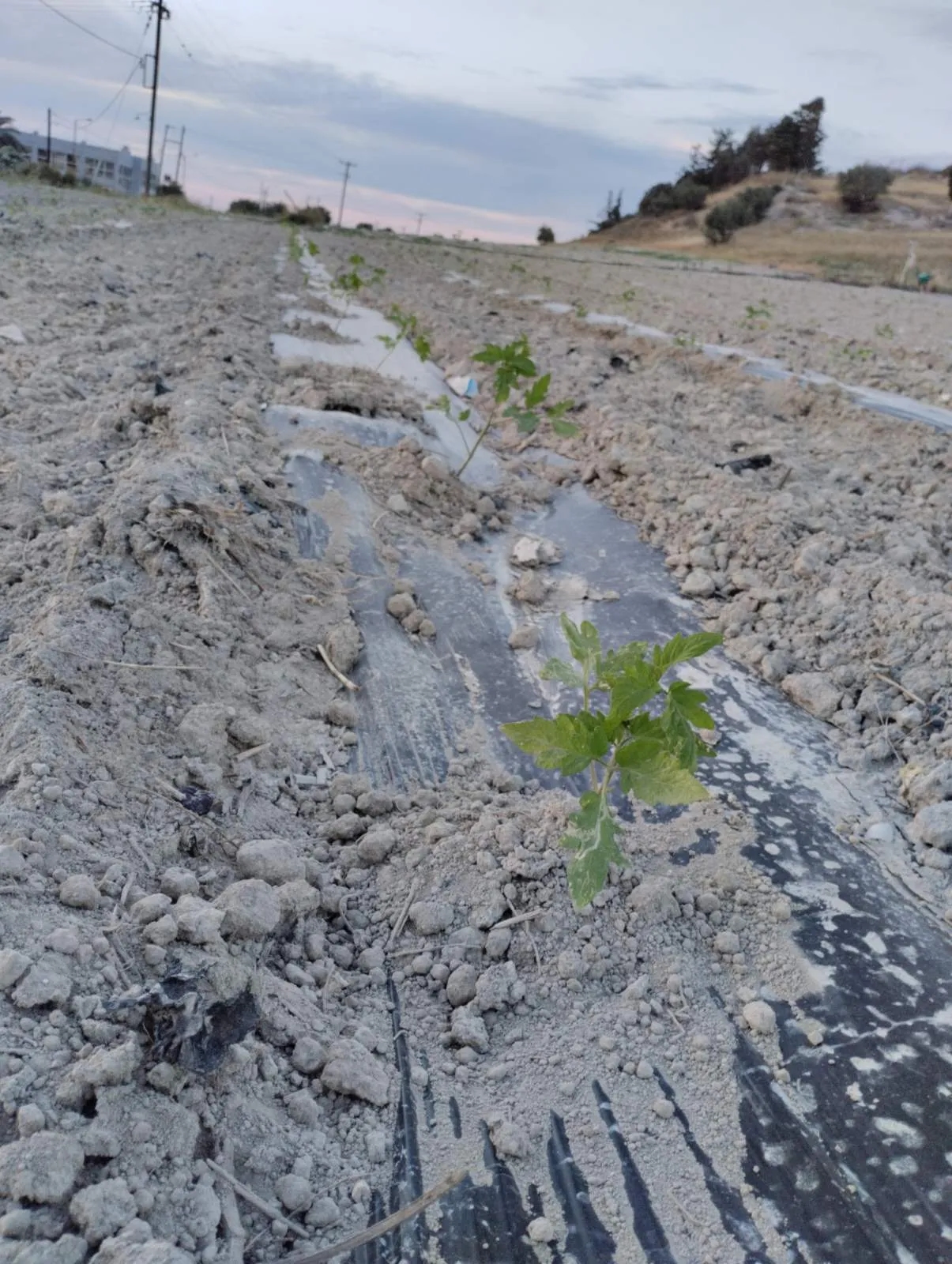
The Crete trial compares three field conditions: a control without green manure, incorporation of faba bean biomass at flowering, and incorporation after harvest. This design allows the timing of incorporation to be examined alongside the subsequent tomato cultivation. Soil analyses are carried out before and after incorporation, while the SmartAgroGenious monitoring system provides information on soil and microclimatic conditions.
The direct-use route emerged from technical and economic work on the recovery of bioactive material. Laboratory extraction was promising, but the cost of a separate processing route led the pilot towards in-situ incorporation. A cultivation protocol has been developed, and a second cultivation cycle and farmer-training activities extend the practical investigation. Faba beans and tomatoes produced through the pilot's cultivation activities have entered local supermarket channels.
The practice examines the agricultural value of retaining legume residues in the same field as part of a crop rotation. It reduces the need for a separate residue-transport and extraction chain and investigates the contribution of organic matter and biological activity to the following tomato crop.
Evaluation combines soil analyses, field comparisons and continuous information on soil and microclimatic conditions. The comparison between incorporation at flowering, incorporation after harvest and a control is central to understanding the effect of the management practice. Crop response and resource-use benefits remain dependent on the conditions and results of the cultivation trials.