Nature-Based Refinement of Treated Wastewater for Reuse
Nature-based polishing of treated wastewater to support planned irrigation and habitat-restoration reuse in Marche.
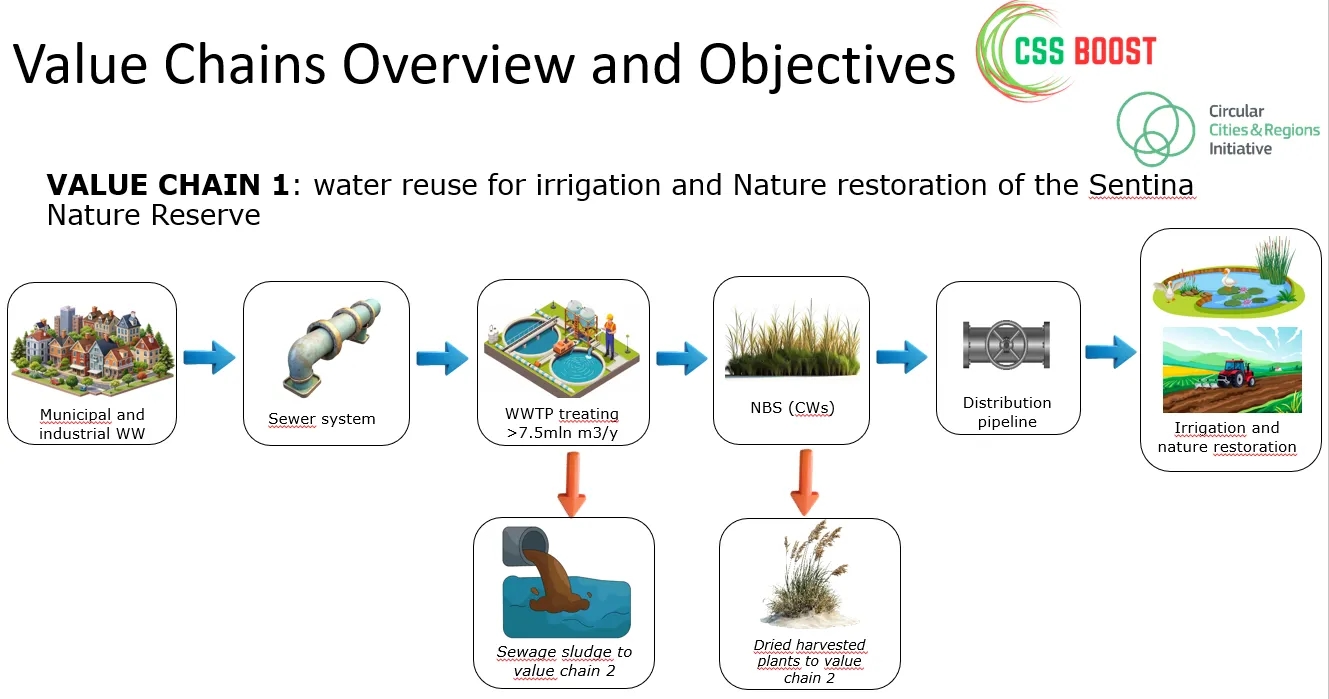
The designed treatment sequence combines prefiltration with a horizontal-flow gravel-bed wetland and a free-water-surface wetland. Hydraulic conditions, vegetation and the quality of the incoming effluent influence treatment. Pumping, conveyance and recirculation arrangements connect the treatment stages with the proposed receiving uses.
The system is in development. Operating capacity, reuse permissions and representative water-quality monitoring will be established through commissioning and validation.
The Marche water-reuse pathway combines prefiltration with two complementary nature-based treatment stages: a horizontal-flow constructed wetland and a free-water-surface wetland. It is designed to further treat effluent from the Brodolini wastewater treatment plant for potential irrigation and ecosystem-restoration applications in the Sentina area.
The horizontal-flow stage is designed for denitrification and biological treatment within a planted gravel bed. The design uses a bed slope of approximately 1%, siliceous gravel in the 5–15 mm range and Phragmites vegetation. Hydraulic conductivity, contact time and root development are important design considerations. The following free-water-surface stage combines planted areas with shallow exposed water, using sunlight, oxygen conditions and biological activity to support additional treatment and disinfection. Elodea canadensis is included in the planting design, with shallow sections intended to limit stagnation and excessive algal growth.
Implementation also covers the existing prefiltration equipment, pumping, pipework and recirculation arrangements. Ground investigations informed changes to the construction approach. The treatment design is accompanied by monitoring requirements for suspended solids, organic load, nutrients and microbiological quality, as well as salinity and turbidity. Construction and procurement activities remain part of the ongoing pilot implementation; treated-water performance will be established through monitoring of the operating system.
The intended environmental contribution is to make treated wastewater available as an additional water resource while supporting the restoration of wetland habitats. The Sentina water balance distinguishes the requirements of agricultural irrigation from those of the reserve's ponds and compares them with the existing canal supply.
The balance identifies an additional annual requirement of 1,565,098 m³ across these uses. This is a planning estimate of unmet demand, rather than a measured volume of reclaimed water delivered by the pilot. Evaluation of the implemented system will combine water quantities with treatment performance, including organic matter, suspended solids, nutrients and microbiological indicators.