Vehicle Component Recovery, Inspection and Controlled Reuse
Inspection, traceability and controlled reuse of suitable bus components, with separate routing of end-of-life materials.
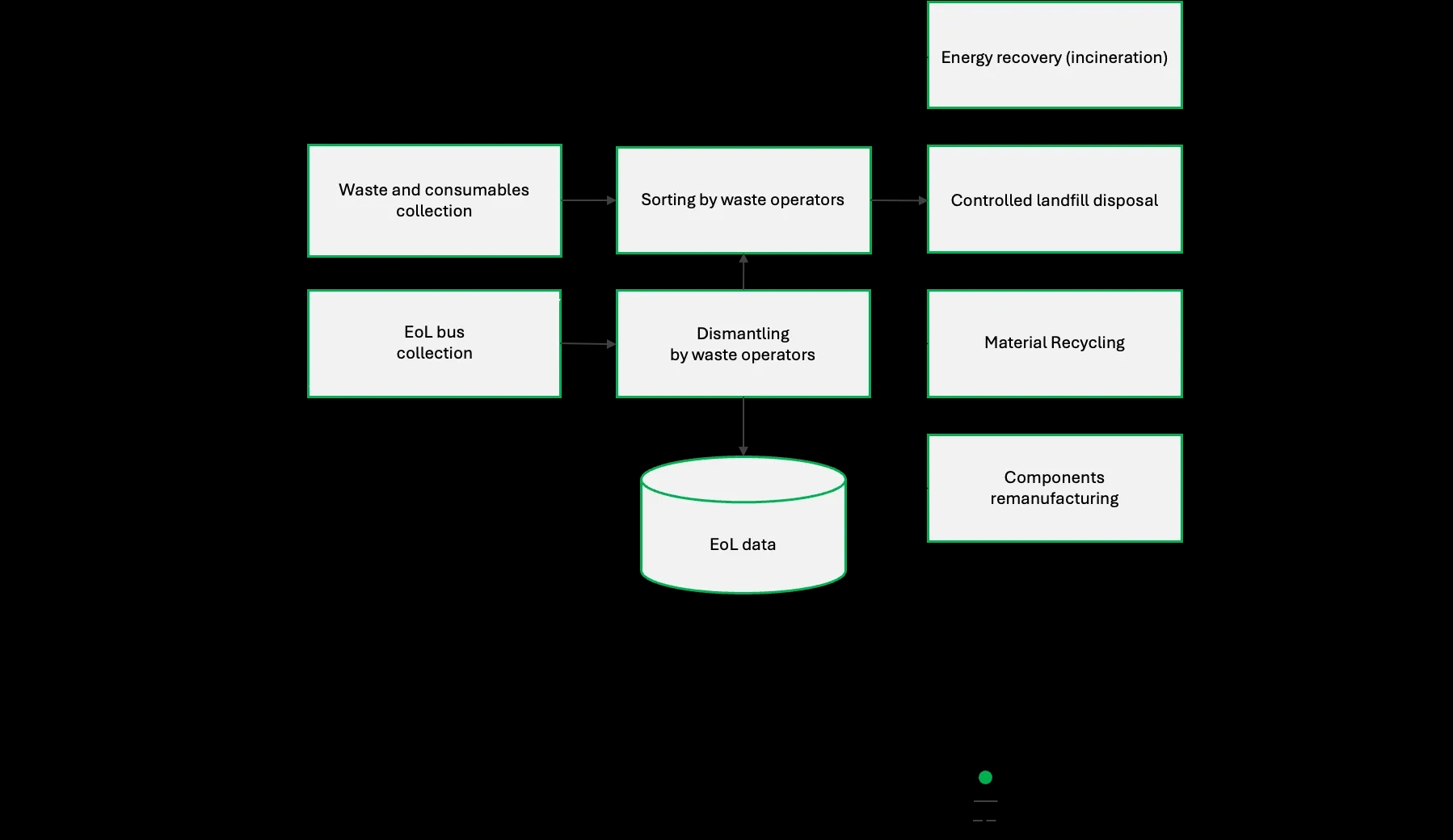
Recovery is linked to end-of-life bus treatment and the maintenance needs of the active fleet. Depollution precedes dismantling and separation of reusable components and material fractions. Reuse depends on component condition and compatibility with the receiving vehicle, together with the operator’s acceptance and traceability arrangements.
Reuse decisions depend on component condition, vehicle compatibility, safety checks and applicable requirements.
The Lisbon pilot links end-of-life bus management with the maintenance of vehicles still in service. The approach examines how components can be recovered from retiring buses and reused within the active fleet, alongside the established routes for dismantling and material recycling. It connects CARRIS maintenance operations with the end-of-life treatment chain involving BGR and the VALORCAR network.
Vehicle treatment begins with depollution and the removal of fluids, batteries and other materials requiring controlled handling. Dismantling can then separate reusable components from material fractions intended for recycling. The pilot's component scope includes items such as engines, gearboxes, alternators, pumps, headlights, doors, glazing and seats, while material recovery considers metals, plastics, glass and rubber.
The CSSBoost work places particular emphasis on documenting the removal and reuse of parts and relating these operations to the receiving vehicle's maintenance. This creates a link between vehicle retirement and continued fleet operation. TRACK supports the collection of pilot information, alongside monitoring of energy use, distance travelled, maintenance and waste.
The pathway builds on existing fleet-management and authorised waste-treatment practices. Its demonstration focuses on making reuse activity and its contribution to the vehicle lifecycle more visible and assessable, with component-specific suitability and traceability remaining central to practical application.
Component reuse investigates a higher-value route for suitable parts before material recycling. In the Lisbon pilot, the relevant comparison concerns the use of recovered components in operating buses, the corresponding maintenance activity and the residual materials sent to authorised treatment.
Monitoring separates component transfers from routine replacement and general fleet operation. This distinction is needed to assess the contribution of reuse to resource retention and service-life extension without attributing all changes in fleet energy use or maintenance to the circular intervention.