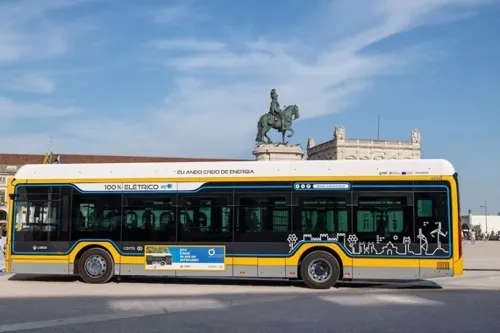
Pilot 4 / Value Chain 2: Bus Service Life
CARRIS already extends the lifespan of buses through mid-life maintenance and other circular practices.
However, operational waste remains significant and some useful metrics are not yet systematically collected.
There is also a need to better monitor energy consumption, emissions, replacement parts, consumables and maintenance-related waste across the fleet.
The bus-service-life case is the operational core of the Lisbon pilot. It combines monitoring of a selected CARRIS fleet with the examination of maintenance, resource use and opportunities to retain value in vehicles and components. Fifteen buses are included, with five diesel, five compressed-natural-gas and five electric vehicles.
TRACK connects information from CARRIS operational systems with pilot dashboards and the CSSBoost data infrastructure. Daily data cover distance travelled, energy consumption and greenhouse-gas-related information, while monthly records address maintenance and waste. The system supports operational awareness and supplies agreed datasets to DAMS for use by other project services.
The case also connects with the recovery of parts from retiring buses. Recording these transfers makes it possible to examine how end-of-life component recovery supports the maintenance of the active fleet. The first monitoring phase has been implemented, and the data model continues to be refined. Comparisons with historical fleet information are interpreted in relation to propulsion technology, vehicle characteristics and operating conditions, providing a basis for assessing circular strategies within a real public-transport service.
Daily monitoring follows kilometres travelled, energy consumption and greenhouse-gas-related information for 15 buses. Maintenance activity and waste are monitored monthly. The fleet includes five diesel, five compressed-natural-gas and five electric buses. TRACK aggregates operational, maintenance and environmental information into dashboards and supplies agreed data to DAMS. Baseline comparisons need to retain vehicle characteristics, the reporting period and operating conditions so that differences are interpreted consistently.
CARRIS operated a mixed bus fleet and applied maintenance and circular-economy practices before CSSBoost. The 2023 fleet comprised 456 diesel buses, 272 compressed-natural-gas buses and 31 electric buses. General mid-life overhauls were carried out when vehicles were approximately 8 to 12 years old, supporting a further 3 to 5 years of operational capability. Maintenance involved internal teams and external providers, including repair or exchange arrangements for selected components. Operational monitoring considered distance, energy use, failures, downtime and emissions. The intensive CSSBoost monitoring cohort comprises 15 buses selected from this wider fleet.
From December 2025 to May 2026, the first monitoring phase covered 15 buses: five diesel, five compressed-natural-gas and five electric. TRACK retrieves CARRIS data, provides dashboard views and exports structured information to DAMS. Data imports and model extensions are ongoing.
Monitoring covers a selected pilot cohort. Component-reuse tracking and model extensions remain in development, while comparisons account for duty cycles and consistent calculation methods.