Sheep-Wool Collection and Consolidation Logistics
A local collection and transport practice connecting sheep shearing with wool-pellet development in Crete.
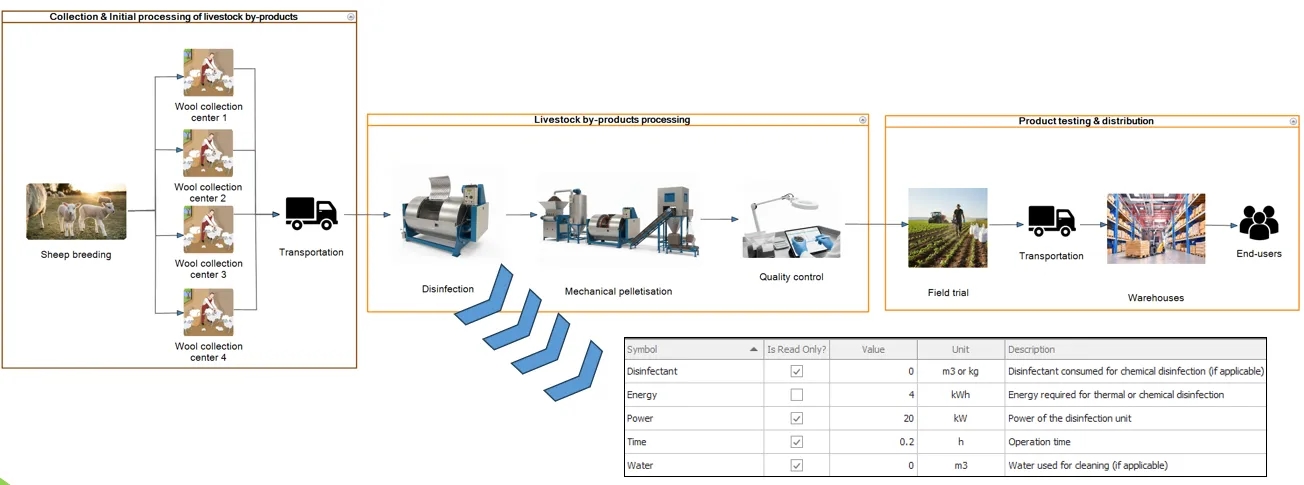
Collection is organised around the shearing season, with a dedicated vehicle transporting wool to the VEGAK facilities in the Heraklion area. Coordination between dispersed farms, the shearing team and the receiving processor connects seasonal supply with pellet preparation and development.
Capacity and service conditions are being developed around local collection and processing arrangements.
The wool-collection practice creates the supply chain needed to bring dispersed livestock by-products into the Crete pellet-development programme. Collection is organised around shearing activities, linking a shearing team with dedicated transport and a processing destination in the Finikia area of Heraklion.
During the collection campaign, wool is transported to the VEGAK facilities for preparation and subsequent mechanical processing. This coordination is important because the feedstock is seasonal and distributed across livestock holdings. The pilot therefore treats collection as an operational part of the valorisation route, alongside pellet formulation and agronomic testing.
The arrangement connects farmers, logistics and processing actors with research on potential soil applications. A second annual collection campaign extends the operational experience beyond the initial preparation stage. Information from collection and processing supports the wider examination of feasibility, including the relationship between available wool, transport requirements and processing capacity.
The practice is relevant to regions where a low-value biological material is available from many small producers. Its transfer depends on the organisation of local collection, the timing of supply and the presence of a suitable processing and end-use pathway.
Organised collection enables wool to enter a potential agricultural valorisation route instead of remaining an underused livestock by-product. Transport is also a resource-consuming step, so the environmental assessment needs to include the actual movement of material between farms, collection arrangements and processing facilities.
The pilot's contribution is the practical coordination of that supply chain. Environmental benefits depend on the full route, including the processing and soil-use performance of the pellets produced from the collected wool.