Pilot 1 / Value Chain 2: Agricultural Residue Valorisation
Agricultural residues, particularly from fava bean cultivation, are often left in fields or disposed of without being systematically reused. This results in missed opportunities to improve soil fertility and reduce the dependency of farmers on synthetic fertilisers.
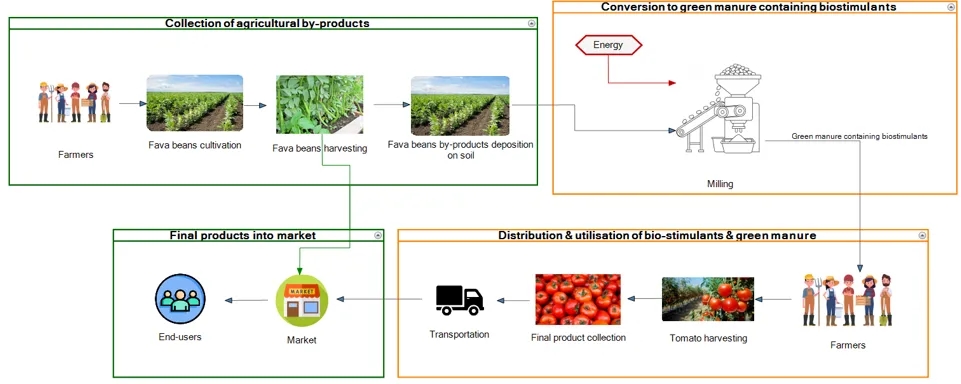
This cultivation practice links faba bean production with a subsequent tomato crop, using the legume residues directly in the field. Instead of separating and transporting the biomass for a dedicated extraction process, the residues are shredded and incorporated into the soil by ploughing. The approach retains the organic material within the agricultural system and makes use of the biological activity associated with the roots and residues.
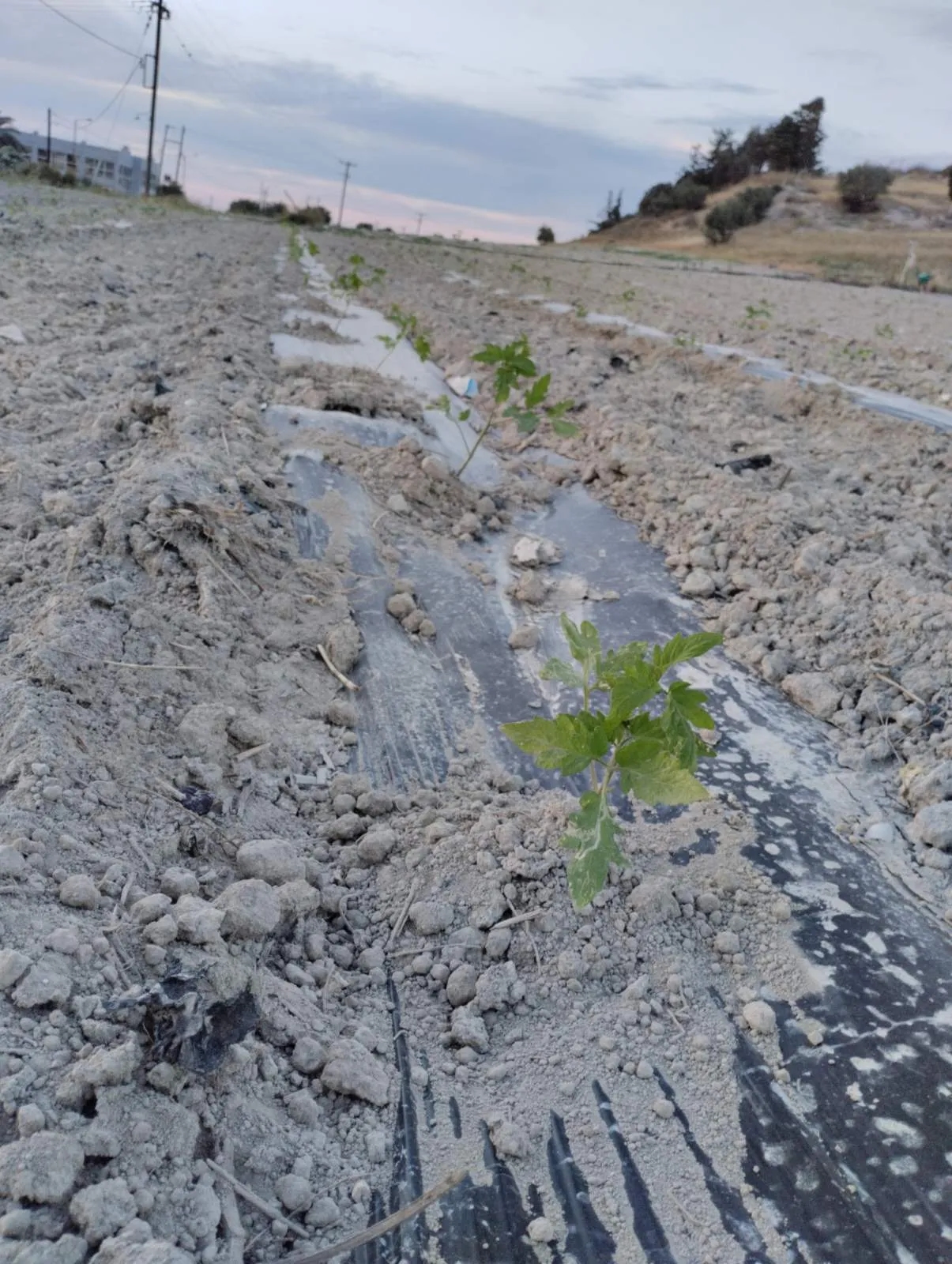
The Crete trial compares three field conditions: a control without green manure, incorporation of faba bean biomass at flowering, and incorporation after harvest. This design allows the timing of incorporation to be examined alongside the subsequent tomato cultivation. Soil analyses are carried out before and after incorporation, while the SmartAgroGenious monitoring system provides information on soil and microclimatic conditions.
The direct-use route emerged from technical and economic work on the recovery of bioactive material. Laboratory extraction was promising, but the cost of a separate processing route led the pilot towards in-situ incorporation. A cultivation protocol has been developed, and a second cultivation cycle and farmer-training activities extend the practical investigation. Faba beans and tomatoes produced through the pilot's cultivation activities have entered local supermarket channels.
Three field conditions are compared: no green manure, incorporation of faba bean residues at flowering, and incorporation after harvest. Soil analyses before and after incorporation provide discrete measurements, while SmartAgroGenious supplies continuous soil and microclimate information. The subsequent tomato crop provides the application context for investigating the residue-management practice. Repeated cultivation cycles and the developed protocol support assessment under actual field conditions.
Faba-bean crop residues were left in fields or removed without systematic reintegration into the soil. These end-of-cycle plant materials were underused despite their potential role in green-manure applications. Agricultural production depended on conventional fertilisation practices, while alternatives required testing under local crop and climatic conditions.
Second-year cultivation trials compare control plots with biomass incorporation at flowering and after harvest. Soil monitoring and before-and-after analyses help assess each treatment under local growing conditions.
Comparison across trial periods requires consistent treated areas, input quantities and separately defined soil and yield indicators.